Authorized AMSOIL Dealer
Joseph Feghali
Miami, FL

1981 Saab 900 2.0L Oil Type and Capacity

Free Vehicle Maintenance App

For cars, trucks, ATVs & more

Track oil changes, save service records, and get maintenance reminders.

Keep your maintenance history handy for your next service.

Your Vehicle's Information

Year:

1981

Make:

Saab

Model:

900

Engine Size:

2.0L

Engine #:

[4] Turbo

Recommended Synthetic Oil for a 1981 Saab 900 2.0L

Product Name Product Description Capacities Product
Signature Series 10W-30 Synthetic Motor Oil Get the best synthetic oil for your 900 now! Save time and money and protect your Saab. With filter 4.5 quarts After refill check oil level. ATMQT-EA
Signature Series 10W-30 Synthetic Motor Oil ATMQT-EA
Add To Cart
Add To Cart
XL 10W-30 Synthetic Motor Oil Protect your 900 with Amsoil and support the best MADE in USA oil! With filter 4.5 quarts After refill check oil level. XLTQT-EA
XL 10W-30 Synthetic Motor Oil XLTQT-EA
Add To Cart
Add To Cart
OE 10W-30 Synthetic Motor Oil AMSOIL OE Synthetic Motor Oil is specially made for the extended oil change intervals recommended for your 1981 Saab 900 2.0L engine. It has advanced synthetic technology that resists chemical breakdown for maximum wear protection for your vehicle which is well beyond the traditional 3,000-mile oil change interval. Get the best synthetic oil now for your Saab 900. With filter 4.5 quarts After refill check oil level. OETQT-EA
OE 10W-30 Synthetic Motor Oil OETQT-EA
Add To Cart
Add To Cart

Recommended oil filters for my 1981 900

Product Name Product Description Product
AMSOIL Ea Oil Filters Awesome filter for your 1981 Saab 900 which is recommended for 15,000 miles/one year, whichever comes first, in normal or severe driving conditions. EA15K51-EA
AMSOIL Ea Oil Filters EA15K51-EA
Add To Cart
Add To Cart
WIX Oil Filter Wix oil filters for your 1981 Saab 900 have extended OEM recommendations which match the drain intervals of AMSOIL XL synthetic motor oil which is 12k or 1 year, whichever is first. 51348-EA
WIX Oil Filter 51348-EA
Add To Cart
Add To Cart
MANN-FILTERS Oil Filters MANN-FILTER filters for your 1981 Saab 900 will remove dirt, dust, carbon deposits and soot. Should be changed as recommended by Saab. W71280-EA
MANN-FILTERS Oil Filters W71280-EA
Add To Cart
Add To Cart

Recommended cabin & Air Filters for my Saab 900

Product Name Product Description Product
MANN-FILTERS Air Filters Awesome MANN-Filter for your 1981 Saab 900 for superb dirt holding capacity and maximum filtration to protect your 900's engine while correcting air flow! C1577-EA
MANN-FILTERS Air Filters C1577-EA
Add To Cart
Add To Cart

Recommended transmission fluids for my 1981 900

Product Name Note Capacities Product Description Product
Signature Series 10W-30 Synthetic Motor Oil Manual Transmission Fluid
4-SPD 5.3 pints Get the best synthetic oil for your 900 now! Save time and money and protect your Saab. ATMQT-EA
Signature Series 10W-30 Synthetic Motor Oil ATMQT-EA
Add To Cart
Add To Cart
XL 10W-30 Synthetic Motor Oil Manual Transmission Fluid
4-SPD 5.3 pints Protect your 900 with Amsoil and support the best MADE in USA oil! XLTQT-EA
XL 10W-30 Synthetic Motor Oil XLTQT-EA
Add To Cart
Add To Cart
OE 10W-30 Synthetic Motor Oil Manual Transmission Fluid
4-SPD 5.3 pints AMSOIL OE Synthetic Motor Oil is specially made for the extended oil change intervals recommended for your 1981 Saab 900 2.0L engine. It has advanced synthetic technology that resists chemical breakdown for maximum wear protection for your vehicle which is well beyond the traditional 3,000-mile oil change interval. Get the best synthetic oil now for your Saab 900. OETQT-EA
OE 10W-30 Synthetic Motor Oil OETQT-EA
Add To Cart
Add To Cart
Super Shift® Racing Transmission Fluid SAE 10W Automatic Transmission Fluid
3 speed T37 Total Fill 8.5 quarts Super Shift Racing Transmission Fluid resists extreme heat and slippage! Rock n' roll on the track with this awesome transmission fluid! Get this oil for your 1981 Saab 900 now! ARTQT-EA
Super Shift® Racing Transmission Fluid SAE 10W ARTQT-EA
Add To Cart
Add To Cart

Recommended coolants for my Saab 900

Product Name Product Description Capacities Product
Passenger Car & Light Truck Antifreeze & Coolant maximum protection for your 1981 Saab 900 under extreme temperatures and operating conditions! Lasts up to 150,000 miles or five years! (whichever comes first) ANTPC1G-EA
Passenger Car & Light Truck Antifreeze & Coolant ANTPC1G-EA
Add To Cart
Add To Cart
Low Toxicity Antifreeze and Engine Coolant Lasts in your 1981 Saab 900 for up to 150,000 miles or five years! (whichever comes first). Biodegradable! ANT1G-EA
Low Toxicity Antifreeze and Engine Coolant ANT1G-EA
Add To Cart
Add To Cart

Maintaining Lubrication Integrity for the 1981 Saab 900 2.0L Turbo

Proper engine care for a vehicle of this era requires a disciplined approach to fluid management and regular component inspections. For owners of the 1981 Saab 900 equipped with the 2.0L Turbo engine, maintaining the correct lubrication standards is a fundamental aspect of long-term mechanical health. Because turbocharging introduces specific thermal demands on an engine, staying attentive to oil condition and potential leaks is essential for consistent performance.

Monitoring Fluid Condition and Potential Leaks

A proactive approach to maintenance involves regular visual inspections of the engine bay and under the vehicle. When managing a vehicle from the early 1980s, it is useful to look for signs of fluid seepage or active leaks. Rather than waiting for a significant loss of lubricant, owners should check for dampness around sealing surfaces and gaskets. If you notice any evidence of oil residue on the engine block or pooling on the ground, these findings warrant further investigation. Such observations can be associated with various factors, including aging seals or loose components. Additionally, monitoring the appearance of the oil itself is a helpful practice. If the lubricant appears excessively dark, gritty, or shows signs of unusual contamination, it may indicate that the service interval has been exceeded or that other engine systems require attention.

Observing Potential Warning Signs

While many maintenance needs are identified through scheduled service, certain symptoms can serve as early indicators that something requires investigation. For example, an unusual mechanical noise during operation should never be ignored, as it can sometimes be related to lubrication levels or quality. Similarly, if you notice changes in how the engine behaves shortly after a service, such as different idling characteristics or unexpected sounds, it is prudent to re-examine the work performed. While symptoms like exhaust smoke or unusual odors can have many different causes—ranging from external leaks contacting hot surfaces to internal combustion issues—they should always be treated as signals to perform a thorough inspection. An oil-related warning light on the dashboard requires immediate attention to prevent potential damage.

Prioritizing Long-Term Engine Care

As vehicles age, maintenance strategies often shift from simple part replacement to more comprehensive condition monitoring. For the 1981 Saab 900, establishing a clear baseline of the vehicle's current mechanical state is highly beneficial, especially if the previous service history is incomplete. If you are unsure of when certain components were last addressed, start by reviewing all available maintenance records. If no records exist, your priority should be to document every fluid change, filter replacement, and repair moving forward. This creates a reliable history that helps distinguish between routine aging and actual mechanical issues. When deciding where to focus your efforts, address any active leaks or observed warning signs first. Once the vehicle is stabilized, you can move toward preventive measures, such as inspecting the condition of various hoses or checking the integrity of electrical connections and wiring if they show signs of brittleness or wear. Distinguishing between necessary repairs and unnecessary parts replacement is key to efficient ownership.

Managing Aging Components and Systems

Maintaining an older vehicle involves more than just changing fluids; it requires a watchful eye on all age-sensitive materials. If equipped, accessible drive belts should be inspected for signs of deterioration such as cracking, glazing, or fraying. Similarly, if the vehicle is present with various rubber hoses, these should be checked for softness, swelling, or hard spots that might indicate they are nearing the end of their service life. Electrical integrity is another important consideration. Inspecting connectors and wiring for corrosion or secure fitment can prevent intermittent issues. Furthermore, ensuring that the air filtration system is clean and free of debris helps maintain optimal airflow, which supports overall engine efficiency. By focusing on these physical inspections, you can often identify potential issues before they escalate into more significant mechanical concerns.

The Role of Consistent Lubrication Maintenance

Consistent attention to the lubrication system is vital for managing the thermal environment within the engine. In a turbocharged application, the oil plays a critical role in helping manage heat and reducing friction between moving parts. Maintaining high lubricant quality helps prevent the buildup of deposits and sludge, which can otherwise accumulate over time and affect mechanical operation. Regularly checking the level of the lubricant ensures that the system remains properly filled, which is necessary for maintaining stable operation. By adhering to a consistent maintenance routine, you help ensure that the engine components remain protected against the stresses of daily driving and varying operating conditions.

Practical Guidance for Buying Engine Oil for your 1981 Saab 900 2.0L

When it is time to replenish your lubricant, the most important step is to match the product to the specific requirements of your engine. Do not rely on general assumptions based on the vehicle's age or the fact that it is a turbo model. Instead, always refer to the application-specific oil viscosity and technical information provided on this webpage. Before making a purchase, carefully check the product labeling to ensure the oil meets the necessary standards for your specific 2.0L Turbo engine. You may choose between different formulations, such as conventional, synthetic blends, or full synthetic oils, depending on what is appropriate for your vehicle's current condition and your maintenance goals. Some high-mileage oil formulations contain additives intended for use in aging engines, including seal-conditioning additives that may be beneficial for older seals. Always verify that the oil you select aligns with the viscosity information displayed above to ensure it provides the correct protection for your engine's internal components. Match the engine oil to the application-specific viscosity information shown on this page to maintain optimal performance and longevity.
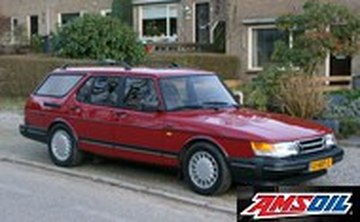
Catalog vehicle photograph for 1981 Saab 900
Vehicle photograph from our catalog. Appearance may differ by model or trim.
Visit us on social media